
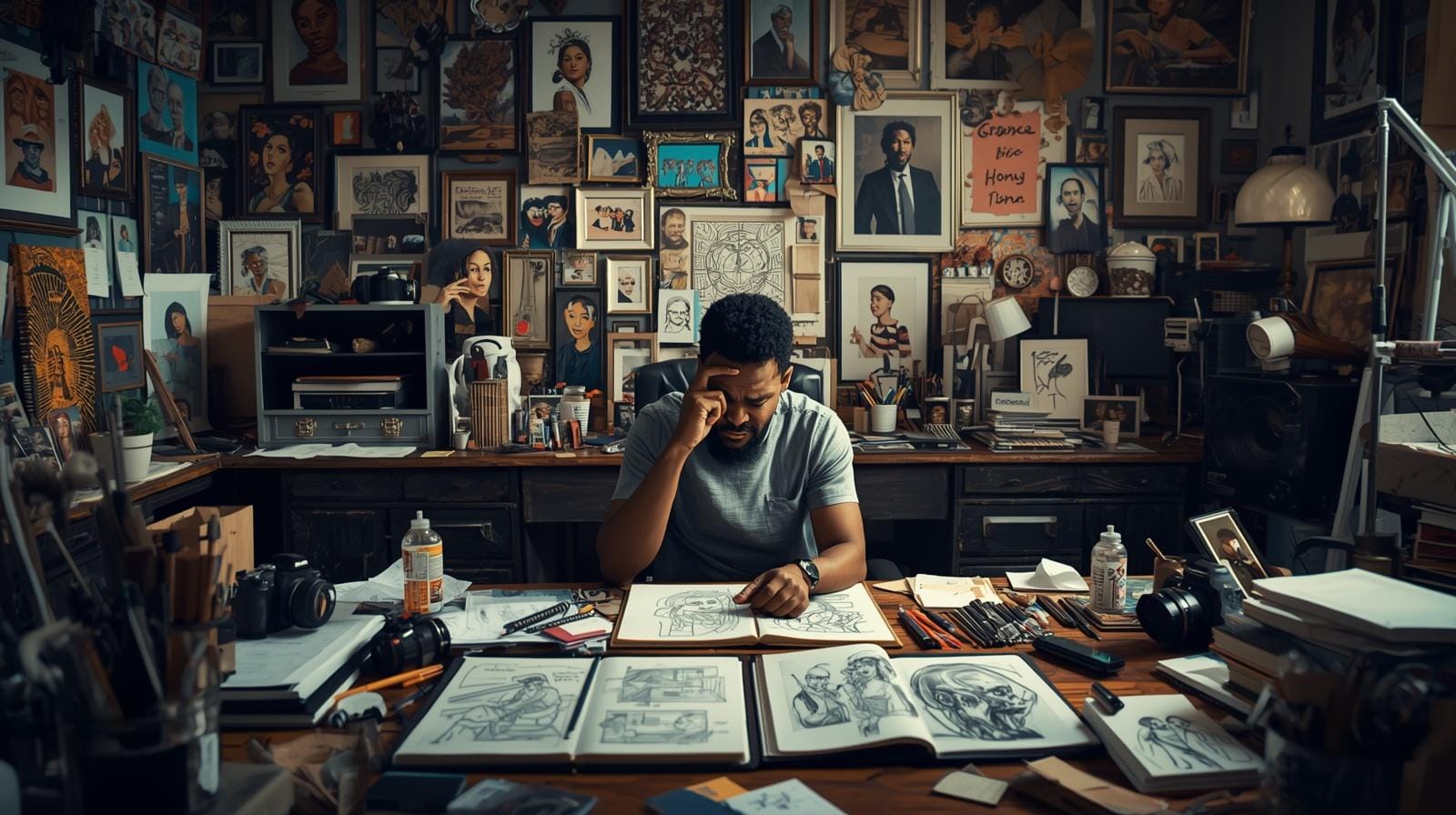
There’s a lie almost every creative has been told at some point:
“Do what you love, and the money will follow.”
It sounds good. It feels right. But for most people, it doesn’t actually play out that way.
What really happens?
You create. You post. You share your work. You get a few likes, maybe some compliments—and then… nothing. No consistent income. No real traction. Just the quiet frustration of knowing you’re talented, but not getting paid like it.
That gap isn’t random.
It’s not because you’re not good enough.
It’s because creativity and monetization are two completely different skill sets—and most creatives were never taught the second one.
This post is about fixing that.
The “Starving Artist” Myth Is a Business Problem, Not a Talent Problem
The idea of the “starving artist” has been normalized for so long that many creatives unconsciously accept it.
Struggle becomes part of the identity.
But here’s the truth:
There is nothing about being creative that requires you to be broke.
The issue isn’t talent. It’s structure.
Think about it—there are creatives making:
- $5,000/month selling digital art
- $10,000/month through brand deals
- $20,000/month through design, content, or licensing
Same tools. Same platforms. Often similar skill levels.
The difference?
They treat their creativity like a business asset, not just an emotional outlet.
When you don’t have systems, pricing, or positioning, your work stays in the “appreciated but unpaid” category.
That’s not a creativity problem.
That’s a business gap.
Why Most Creatives Undercharge
Undercharging is one of the fastest ways to stay stuck—even if you’re consistently getting work.
And most creatives don’t even realize they’re doing it.
Here’s why it happens:
1. You price based on effort, not value
You think:
“This only took me 2 hours, so I’ll charge $50.”
But the client isn’t paying for your time. They’re paying for the outcome:
- A logo that represents their brand
- Content that attracts customers
- Designs that increase sales
Time-based thinking keeps your income capped.
2. You fear losing the opportunity
So you lower your price to “make it easier” for someone to say yes.
But lower prices don’t attract better clients—they attract more price-sensitive ones.
3. You don’t have a clear offer
If you’re saying:
“I do art” or “I design things”
That’s too vague to justify strong pricing.
People pay more for specific solutions, not general skills.
The Difference Between a Hobby and a Business
This is where most creatives hit a wall.
They’re putting in effort—but not building something that can generate consistent income.
Here’s the simplest way to understand the difference:
A hobby:
- You create what you feel like creating
- You share without a clear goal
- Income is inconsistent or nonexistent
- There’s no system behind it
A business:
- You create with a specific audience in mind
- You solve a clear problem or fulfill a demand
- You have defined offers and pricing
- There’s a repeatable way to make money
Neither is wrong.
But you can’t expect business-level income from hobby-level structure.
If your goal is to make money, something has to shift:
from expression → to execution.
4 Ways to Package Creative Skills Into Sellable Products
If you want to start earning consistently, you need to package your creativity into something people can clearly understand—and buy.
Here are four practical ways to do that:
1. Service-Based Offers
This is the fastest way to start making money.
You’re offering your skill directly:
- Graphic design packages
- Content creation for brands
- Video editing services
- Custom illustrations
Why it works:
You’re solving a direct need, which makes it easier to get paid.
2. Digital Products
Turn your knowledge or creative process into something scalable.
Examples:
- Design templates
- Presets or filters
- Ebooks or guides
- Creative toolkits
Why it works:
You create once and sell repeatedly.
3. Content + Monetization
Build an audience and monetize through:
- Brand deals
- Affiliate marketing
- Platform payouts
This works especially well for:
- Artists
- Designers
- Videographers
Why it works:
Attention becomes an asset.
4. Licensing Your Work
Instead of selling once, you get paid multiple times.
Examples:
- Stock photos or videos
- Music licensing
- Design assets
Why it works:
Your work continues generating income long after it’s created.
Real Examples of Creatives Earning Full-Time Income
Let’s make this real.
Here’s what this can actually look like in practice:
Example 1: The Designer
Starts by offering logo packages for $150.
Refines their process. Improves positioning. Raises prices.
Within a year:
- Charging $800–$1,500 per project
- Working with 3–5 clients per month
- Earning $3,000–$6,000/month
Example 2: The Content Creator
Begins posting consistently with no income.
Builds a small but engaged audience.
Then:
- Lands brand deals ($200–$1,000 each)
- Creates UGC content for companies
- Adds affiliate links
Within months:
- Earning $2,000–$5,000/month
Example 3: The Digital Product Creator
Creates a simple $15 product (like a template or guide).
Focuses on solving one specific problem.
Builds traffic through content.
Within time:
- 200 sales/month = $3,000
- Scales with additional products
None of these people became completely different.
They just stopped relying on creativity alone—and built systems around it.
The First Step to Take This Week
Don’t overcomplicate this.
You don’t need a full brand. You don’t need a huge audience.
You need one clear move.
Here’s what to do this week:
Step 1: Choose one skill
Not five. Not ten.
Just one thing you can already do:
- Design
- Writing
- Video editing
- Photography
Step 2: Define one offer
Make it specific.
Instead of:
“I do graphic design”
Say:
“I create Instagram content packs for small businesses”
Clarity increases value instantly.
Step 3: Set a starting price
Don’t overthink it.
Pick something that feels slightly uncomfortable—but fair.
Step 4: Reach out or publish
- Message potential clients
- Post your offer
- Share examples
You don’t need perfect conditions.
You need proof that someone will pay you.
That changes everything.
Conclusion: Creativity Alone Isn’t the Problem—Lack of Structure Is
If you’ve been struggling to make money as a creative, it’s not because your work isn’t good enough.
It’s because no one taught you how to turn it into something that sells.
Once you understand:
- How to package your skills
- How to position your value
- How to create consistent income
Everything starts to shift.
You stop guessing.
You start building.
And most importantly—you start getting paid.
Ready to Turn Your Creativity Into Income?
If you want a clear, step-by-step system designed specifically for creatives who are tired of guessing and ready to earn, the Creatives Blueprint breaks it down for you.
Inside, you’ll learn how to:
- Turn your skills into sellable offers
- Price your work with confidence
- Build consistent income without burning out
This isn’t theory—it’s a practical path out of the “starving artist” cycle.
Get the Creatives Blueprint and start building income from your creativity—on purpose.